
The recent social media activity from President Donald Trump, including a controversial meme and subsequent remarks to reporters, has ignited a fierce debate about the administration’s approach to crime in major American cities, particularly Chicago.1 The controversy began when the President shared an image on his Truth Social platform that drew strong condemnation from Illinois’s top officials.2 The meme, an “Apocalypse Now”-style parody, featured an altered image of Trump and a caption that read, “I love the smell of deportations in the morning.3 Chicago is about to find out why it’s called the Department of WAR.” This post was made a day after he had signed an executive order to officially restore the Pentagon’s old name, the Department of War, a move that critics say signaled an aggressive, militaristic approach to domestic policy.4
The reaction from Illinois Governor J.B. Pritzker and Chicago Mayor Brandon Johnson was immediate and scathing.5 Governor Pritzker took to social media to state that “The President of the United States is threatening to go to war with an American city.6 This is not a joke. This is not normal.” He further labeled the President as a “scared man” and a “wannabe dictator,” asserting that Illinois would not be intimidated.7 Mayor Johnson echoed these sentiments, accusing the President of seeking to “occupy our city and break our Constitution.” He emphasized the need for Chicago to defend itself from what he described as authoritarianism.8 This backlash from state and local leaders highlighted the deep-seated political divisions and the ongoing conflict over the use of federal power in local law enforcement matters.9
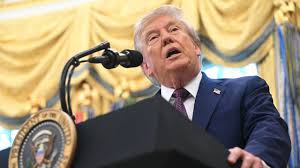
The day after the meme was posted, President Trump addressed reporters outside the White House, where he was pressed on the matter by several journalists.10 When asked by NBC’s Yamiche Alcindor if he was preparing to “go to war” with Chicago, the President dismissed the question as “fake news.” In a heated exchange, he told the reporter, “Be quiet, listen! You don’t listen! You never listen. That’s why you’re second-rate.” He then clarified his position, stating that his intention was not to wage war but to “clean up our cities” so that people are not being killed every weekend.11 “That’s not war, that’s common sense,” he asserted.
During the same briefing, when questioned by ABC’s Selina Wang about why Chicago was being singled out over other cities with higher crime rates, the President responded by citing recent homicide and injury statistics from the city.12 He pointed to the number of people killed and wounded in Chicago over the previous two weekends, arguing that the city’s figures were among the worst in the nation.13 He has repeatedly floated the idea of deploying federal troops or the National Guard to Chicago and other major cities to combat violent crime, a proposal that has been consistently opposed by local officials who argue that federal intervention would be an overreach and infringe upon state sovereignty.14
This entire episode is a microcosm of the larger political and social tensions in the United States. The President’s use of a provocative meme and his confrontational style with the press have become hallmarks of his administration, designed to rally his base and challenge his political opponents. The responses from Governor Pritzker and Mayor Johnson reflect the fear and concern among Democrats and local leaders about the potential for federal overreach and the militarization of domestic policy.15 The debate over how to address violent crime, and the role of the federal government in that effort, remains a central and contentious issue, with this latest exchange serving as a stark reminder of the deep divisions that define the American political landscape. The incident underscores a persistent and unresolved conflict between federal authority and local governance, a tension that is only exacerbated by the use of inflammatory rhetoric and imagery.
Leave a Reply