
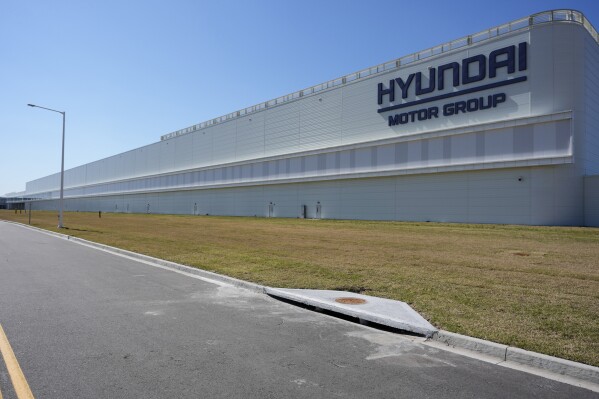
In a swift and unannounced operation that has escalated into a diplomatic crisis, federal immigration agents descended on the construction site of a massive new Hyundai electric vehicle plant in Georgia, detaining hundreds of workers, a majority of whom are South Korean nationals.1 The raid, one of the largest single-site immigration enforcement actions in recent history, has not only halted a flagship economic development project but has also cast a harsh light on the delicate balance between the Trump administration’s “America First” immigration agenda and its efforts to attract significant foreign investment from key allies.2
The raid, which was the result of a monthslong criminal investigation into alleged unlawful employment practices, took place at a sprawling complex in Bryan County, Georgia, a site that Governor Brian Kemp has heralded as the “largest project in state history.”3 The plant, a joint venture between South Korean giants Hyundai Motor Group and LG Energy Solution, is a central component of a planned $7.6 billion investment by Korean companies in the U.S. electric vehicle market.4 Federal agents, reportedly from multiple agencies including Immigration and Customs Enforcement (ICE) and Homeland Security Investigations, detained 475 individuals.5 According to officials, most of those arrested were South Korean nationals, a fact that has sparked a furious response from Seoul.6
The South Korean government, a key U.S. ally, immediately expressed “concern and regret” over the operation.7 South Korean President Lee Jae Myung’s office stated that his government would pursue “all-out efforts” to protect its citizens and that a deal had been reached with the U.S. to repatriate the detained workers.8 A chartered plane is reportedly being sent to bring the workers home.9 The move has been widely seen as a diplomatic victory for Seoul and a concession by Washington, which likely sought to de-escalate tensions with a crucial economic partner. The incident, however, has ignited an intense political debate within South Korea, with opposition parties accusing the government of failing to protect its nationals and to manage its diplomatic relationship with the U.S.
For the Trump administration, the raid presents a complex and contradictory set of challenges. On one hand, the operation is a clear fulfillment of the President’s campaign promise to crack down on illegal immigration and step up interior enforcement.10 President Trump has publicly defended the raid, stating that ICE was “just doing its job” and that those arrested were “illegal aliens.”11 This hardline stance resonates with his political base and reinforces his image as a leader committed to a tough immigration policy.
On the other hand, the raid has been disruptive to a high-profile economic project that both the state of Georgia and the federal government have touted as a success story of bringing foreign investment and jobs to the U.S. Critics argue that such aggressive enforcement actions risk alienating foreign companies and could jeopardize future investment, which runs counter to the administration’s stated goal of “making the United States the best place in the world to do business.”12 The fact that the raid targeted a plant operated by a close ally and resulted in the detention of its citizens makes the situation a diplomatic liability. It highlights a fundamental tension between the administration’s immigration and economic priorities. The legal status of the detained workers also adds to the complexity, as reports indicate some were on visas that did not permit them to perform manual labor, a gray area that major companies have often navigated to fill labor shortages.
In conclusion, the raid at the Hyundai plant is more than a standard immigration enforcement operation.13 It is a powerful symbol of the current geopolitical climate, a collision of economic realities, and a test of the diplomatic strength between two allied nations. As the detained workers are prepared to be sent home, the long-term fallout of this raid will continue to be felt, both in the halls of power in Washington and Seoul and on the ground in Georgia, where the future of a multibillion-dollar project now hangs in the balance.
Leave a Reply