
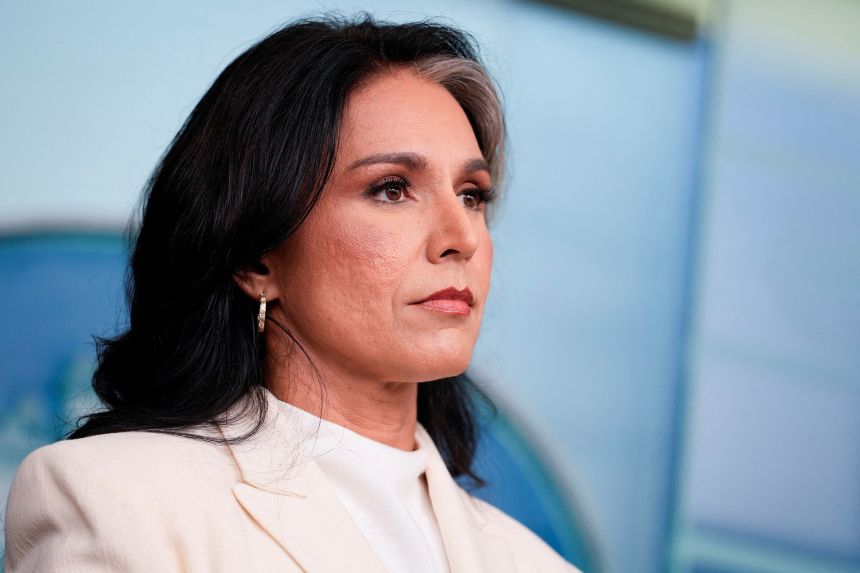
In a move that has sent reverberations throughout the American intelligence community, Director of National Intelligence Tulsi Gabbard has dismissed one of the CIA’s most senior officials specializing in Russian affairs. The abrupt ousting, which also included the revocation of security clearances for dozens of other intelligence personnel, occurred just days after a high-profile summit between President Donald Trump and Russian President Vladimir Putin in Anchorage, Alaska.
The dismissal of the career intelligence officer, who managed hundreds of analysts and had been at the forefront of the 2016 Russian election interference investigation, has been described by sources as a “career ender.” According to reports, the official was among 37 individuals who had their security clearances revoked for allegedly having “betrayed their oath to the Constitution.” The purges are viewed by many as a continuation of Gabbard’s stated mission to root out what she refers to as “deep state holdovers” and end the perceived “politicization” of intelligence. Since her confirmation, Gabbard has systematically fired a number of officials and has taken steps to consolidate power, moving key offices and personnel from the CIA to her own Office of the Director of National Intelligence (ODNI).
The timing of the firings, so soon after the Trump-Putin summit, has raised concerns among critics who fear the moves are designed to silence dissent and consolidate political control over the intelligence community. The meeting in Alaska, which was intended to de-escalate tensions and potentially pave the way for a resolution to the ongoing conflict in Ukraine, reportedly ended without a definitive ceasefire agreement. The White House, however, maintains that the talks initiated a new negotiating process, with President Trump expressing optimism about a future peace deal. Russian President Putin, on the other hand, has shown little willingness to make significant concessions, even as President Trump has threatened severe economic sanctions against Russia if a peace agreement is not reached.
The latest actions by the Director of National Intelligence fit a pattern of behavior that began shortly after her confirmation. Gabbard, who faced scrutiny during her confirmation hearings for past statements perceived as sympathetic to Russia and her support for government leaker Edward Snowden, has moved aggressively to reshape the intelligence community. She has declassified documents that she claims show officials in the Obama administration distorted intelligence on the 2016 election and has referred multiple intelligence professionals to the Department of Justice for alleged leaks.
Critics, including former intelligence officials and Democratic lawmakers, argue that Gabbard’s actions are undermining the independence of the intelligence community and are creating an environment where intelligence analysis is at risk of being manipulated for political purposes. The firings, they contend, send a clear message to intelligence professionals that their jobs are contingent upon producing analysis that aligns with the administration’s political agenda rather than objective truth. The move to seize more direct control over the President’s Daily Brief is also seen as a way to control the flow of information to the President. While the White House and Gabbard’s office maintain that the purges are necessary to restore integrity and accountability, the actions are viewed by many as a troubling consolidation of power and a direct threat to the non-political nature of U.S. intelligence.
Leave a Reply