
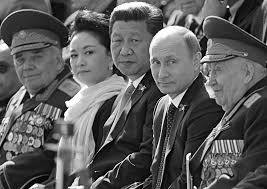
In a powerful and meticulously choreographed spectacle, Chinese President Xi Jinping is set to host a major military parade that will serve as a definitive and unequivocal show of solidarity with his counterparts, Russian President Vladimir Putin and North Korean leader Kim Jong Un. This gathering, commemorating the 80th anniversary of Japan’s formal surrender in World War II, is far more than a historical commemoration; it is a clear and direct message of defiance to the West, signaling the consolidation of an emerging, alternative world order. The presence of these three leaders, standing side by side in Beijing’s Tiananmen Square, offers a visual representation of a burgeoning geopolitical axis, defined by mutual support in the face of international pressure and sanctions.
The parade, scheduled for September 3rd, is poised to be one of China’s most significant in years. It will not only feature a procession of tens of thousands of troops but also a grand display of the country’s most advanced and cutting-edge military hardware. All of the equipment on display, from state-of-the-art fighter jets and electronic jamming systems to missile defense technologies and hypersonic weapons, is domestically produced and currently in service. This showcase of military might is a clear projection of China’s rapidly modernizing armed forces under President Xi, who has made strengthening the People’s Liberation Army (PLA) a central pillar of his rule. The subtext is clear: the alliance between these nations is not merely political but is backed by formidable and ever-growing military capabilities.
The significance of the attendees cannot be overstated. With 26 foreign heads of state and government on the guest list, the notable absence of leaders from the United States and other major Western nations is a stark statement. The presence of leaders like Iran’s President Masoud Pezashkian, Belarus’s Aleksandr Lukashenko, and Serbia’s Aleksandar Vucic further underscores a gravitation toward a bloc of nations that are either openly hostile or increasingly distant from Western-led alliances. The presence of Vladimir Putin and Kim Jong Un, however, is the central narrative. For Putin, who has been battered by Western sanctions since his invasion of Ukraine, this parade offers a critical show of support from Beijing, which has continued to purchase Russian energy and supply dual-use technology. The deepening of this “no-limits partnership” is a direct challenge to the effectiveness of Western sanctions and a lifeline for Russia’s beleaguered economy.
For Kim Jong Un, his attendance at the parade is a truly historic and highly symbolic moment. It marks his first trip to China in six years and his first-ever appearance at a major multilateral event. The reclusive leader’s participation sends a powerful signal, both domestically and internationally, that North Korea is not as diplomatically isolated as the world might believe. Experts suggest that Kim is using this platform to repair ties with China, which have cooled in recent years amid Pyongyang’s growing military and economic reliance on Russia. His presence alongside Xi and Putin is seen as a strategic move to broaden his global status and to jointly respond to the trilateral cooperation between the U.S., South Korea, and Japan. This show of unity is a clear indication that a new, more robust alliance is solidifying in the face of shared geopolitical pressures.
This unprecedented meeting of three of the world’s most powerful autocratic leaders marks a new chapter in international relations. The parade is not just an opportunity for a dramatic photo-op; it’s a profound statement on the shifting balance of power. With global tensions mounting and traditional alliances under strain, the collective display of defiance from Beijing, Moscow, and Pyongyang serves as a potent reminder that the unipolar world order of the past is rapidly giving way to a more complex and multipolar reality.
Leave a Reply