
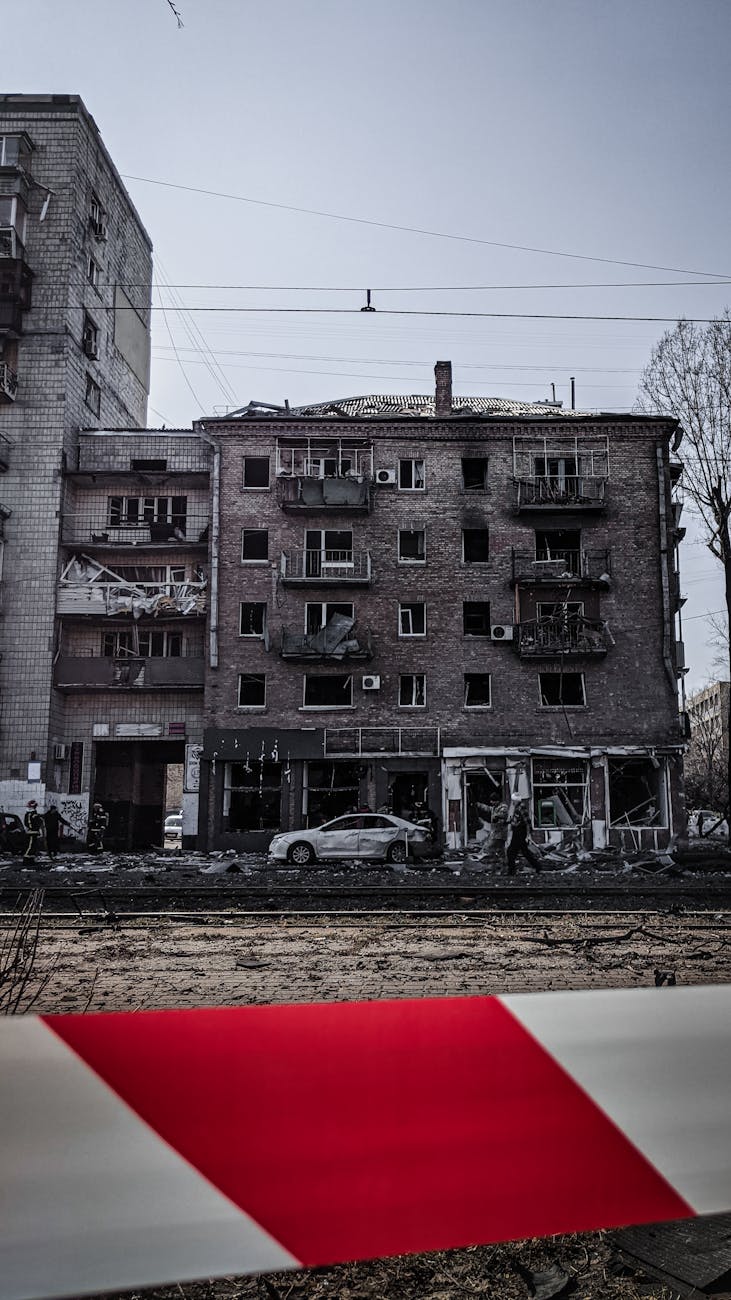
In a 24-hour period of intense global and domestic developments, a major Israeli strike in Qatar, a new U.S. crime crackdown, a geopolitical confrontation over Russian drones, a significant public health report, and ongoing aviation safety concerns have all converged to underscore the volatile and unpredictable nature of the current moment. Each of these events, while seemingly disconnected, reflects the complex web of political, military, and social forces at play around the world.
The most explosive development came from the Middle East, where an Israeli airstrike in Doha, Qatar, targeted senior Hamas leaders.11 The operation, which reportedly killed six people including a Qatari security officer, marks a significant escalation in Israel’s campaign and has sent shockwaves through the region.12 In an unusual move, President Donald Trump publicly distanced himself from the strike, asserting that it was “a decision made by Prime Minister Netanyahu” that “does not advance Israel or America’s goals.”13 The Qatari government, a key mediator in the conflict, has condemned the “blatant attack” and warned that it could jeopardize the fragile ceasefire negotiations aimed at securing the release of Israeli hostages.14 This incident highlights the deep tensions between Israel’s military objectives and the diplomatic efforts of its U.S.-backed allies, further complicating the path to a lasting peace.
Simultaneously, the Trump administration launched a new, aggressive immigration enforcement operation in Chicago.15 Dubbed “Operation Midway Blitz,” the crackdown is part of a broader push to target so-called “sanctuary cities,” which the administration accuses of protecting “criminal illegal aliens.”16 The Department of Homeland Security’s announcement of the operation, which reportedly involves federal agents making arrests in predominantly Hispanic neighborhoods, has sparked outrage from local officials and immigrant advocates. Critics argue that the operation is more of a political statement than a public safety measure, noting that similar crackdowns in other cities have often targeted individuals with no criminal record. This move highlights the administration’s focus on a hardline immigration stance and its willingness to use federal power to challenge local and state authority.
In Europe, the war in Ukraine took a dangerous turn as Russian drones violated the airspace of Poland, a member of the NATO alliance.17 Polish forces shot down the drones, with NATO and Polish officials in close consultation over the incident.18 The violation is a significant escalation and a clear test of NATO’s resolve. Polish and Ukrainian leaders have condemned the action, with some warning that Russia is testing the West’s willingness to defend its allies.19 The incident has renewed calls for a more robust air defense system for Eastern Europe and underscores the ever-present risk of a direct confrontation between Russia and NATO, a scenario that threatens to plunge the continent into a wider conflict.
Meanwhile, on the domestic front, the “Make America Healthy Again” (MAHA) commission, led by Health Secretary Robert F. Kennedy Jr., released its second major report. The report outlined a new public health strategy with a focus on improving children’s health.20 Its recommendations include new research into vaccine injuries and autism, stricter oversight of prescription drug ads, and promoting healthier food options in schools. While the report contains some ideas that have bipartisan support, it has been met with heavy criticism from public health experts and a bipartisan group of senators who have raised alarms over the administration’s anti-vaccine rhetoric and its impact on public trust in science.
Finally, the aviation world has seen a number of developments ranging from tragic accidents to new technological strides. Recent weeks have seen several plane crashes and a number of hard landings, prompting renewed scrutiny of airline safety.21 Amid these incidents, the Federal Aviation Administration (FAA) is taking steps to enhance safety, including proposing civil penalties for companies that violate hazardous materials regulations and launching the process to select an integrator for a new air traffic control system.22 These actions, combined with the continued push for AI and advanced technologies in aircraft maintenance and flight management, reflect the aviation industry’s ongoing efforts to balance innovation with safety in an ever-evolving landscape.
Leave a Reply