
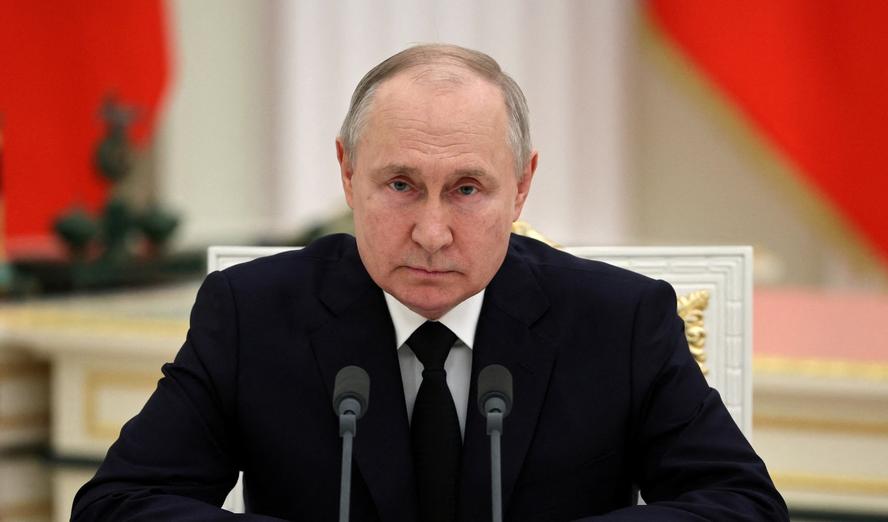
In a chilling escalation of rhetoric, Russian President Vladimir Putin has issued a direct and unequivocal warning to Western nations, stating that any military personnel deployed to Ukraine would be considered a direct participant in the conflict and would face the full might of Russia’s armed forces. The statement, delivered during a televised address, represents a dangerous new turn in the ongoing war and is a clear effort by the Kremlin to set a hard “red line” against what it views as an increasingly intrusive and hostile Western intervention. The implications of this warning are profound, raising the specter of a direct military confrontation between Russia and NATO, a scenario that was once considered unthinkable.
The President’s remarks were made in the context of persistent reports that a number of Western nations have quietly and, at times, openly, deployed troops to Ukraine. While the numbers remain small and their official roles are limited to training and support, the presence of these soldiers is a clear provocation from the Kremlin’s perspective. Moscow has long argued that the West is fighting a “proxy war” in Ukraine, using advanced weaponry and intelligence to aid the Ukrainian military. Putin’s latest statement, however, goes a step further, asserting that the presence of even a small number of Western troops crosses a critical threshold, effectively transforming the conflict from a proxy war into a direct one.
The warning also arrives amidst a period of political and military shifts. The Kremlin has consistently claimed that Western military support, including tanks, long-range missile systems, and fighter jets, is prolonging the conflict. Now, with the alleged presence of Western military advisers and personnel, the Russian government appears to be signaling that its response will be more aggressive. Putin’s statement was not a casual remark but a carefully crafted piece of political theater designed to serve a number of purposes. First and foremost, it is a warning to European nations, particularly those who have been most vocal about providing military assistance to Ukraine. It is also an attempt to rally the Russian public behind a narrative of a defensive war against a Western-led attack.
The response from Western capitals has been a mix of condemnation and measured caution. NATO officials have reiterated that the alliance is not a party to the conflict, and that any troops present are there at the request of the Ukrainian government and are not engaged in combat roles. However, the President’s threat has undoubtedly added a new layer of complexity to the debate over military aid. While some nations may be undeterred, others could be re-evaluating their policy, fearing that any further support could lead to a direct and perilous escalation with a nuclear-armed Russia. The warning has also likely intensified the debate within a number of countries over whether to continue or expand military assistance.
In conclusion, Putin’s ominous warning is a dangerous and destabilizing development in a conflict that has already defied expectations. It is a calculated risk, one that seeks to test the resolve of the West and to force a re-evaluation of its commitment to Ukraine. The coming weeks will be critical, as the international community weighs its response. The ultimate outcome will not only determine the future of the war but will also shape the geopolitical landscape for years to come.
Leave a Reply